2024: seasonal transformations

I entered 2024 lost in painful sadness. I had experienced harm in major spheres of my life as last year closed out. Depression-laced desires for familiar connection blocked my ability to see and feel the tangible resources around me. It took some months, maybe the entire year, before I could really take stock of what I did have and not just what I was missing. Now I sit reflecting on my movements and processes over these past 12 months, and I am in awe of me and my beautiful life.
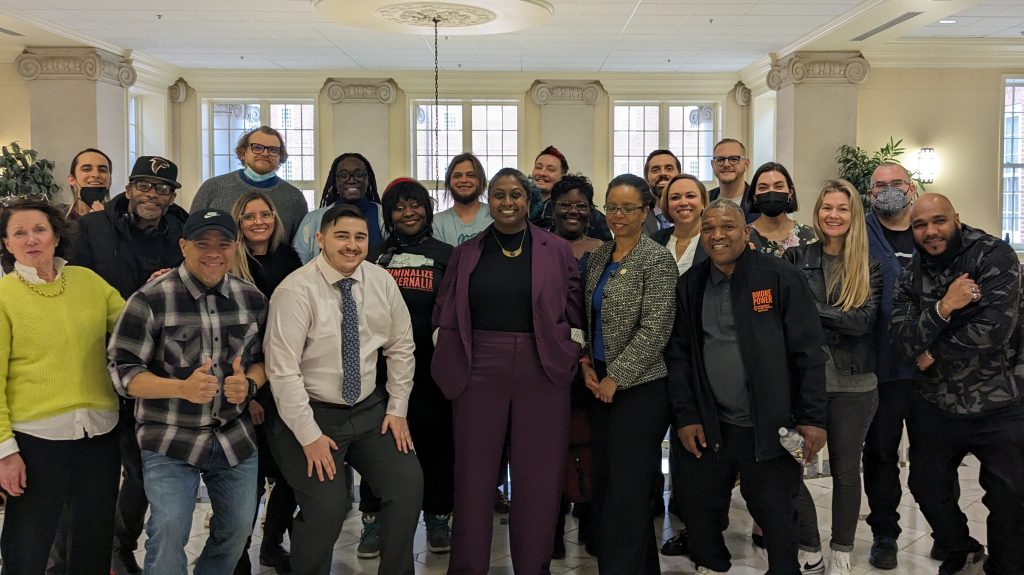

Harm Reduction policy advocates in Annapolis for the Maryland General Assembly, March 2024.

The early months of 2024 found me working hard, leaning on my survival mechanisms while moving through layers of grief. My departure from Baltimore Harm Reduction Coalition was set for March 27th, just beyond the Spring Equinox. It was real and I did leave, but the weeks leading up to that day felt like a movie. As if I was following a script, expecting the scene of “departing co-executive director” to inevitably end.

To ground myself in the reality of this big change, I took in the details of every last Zoom meeting, legislative hearing, organizational policy write-up, and kit-making shift. I went above (and so very beyond) to create a hefty transition packet. My dear colleagues organized a Star Trek themed farewell party that brought joy and sweetness to this transition.

Spring is my season. Chill air warming, hyacinths and daffodils in bloom, backyard fires, my birthday, slow walks in Chinquapin Park with my husband. In 2024, Spring had the special twist of a life changed. I wrote, read, learned, and traveled on my own time and dime. Pittsburgh, PA. Portland, Maine. Atlanta, Georgia. Short conferences in and around D.C. with Staples-printed business cards for my burgeoning job as a consultant. My role with the National Harm Reduction Coalition board of directors shifted as I became a board co-chair. I applied and was accepted into a week-long writing retreat to be held in the fall. Pieces of my next chapter began to fall into place.
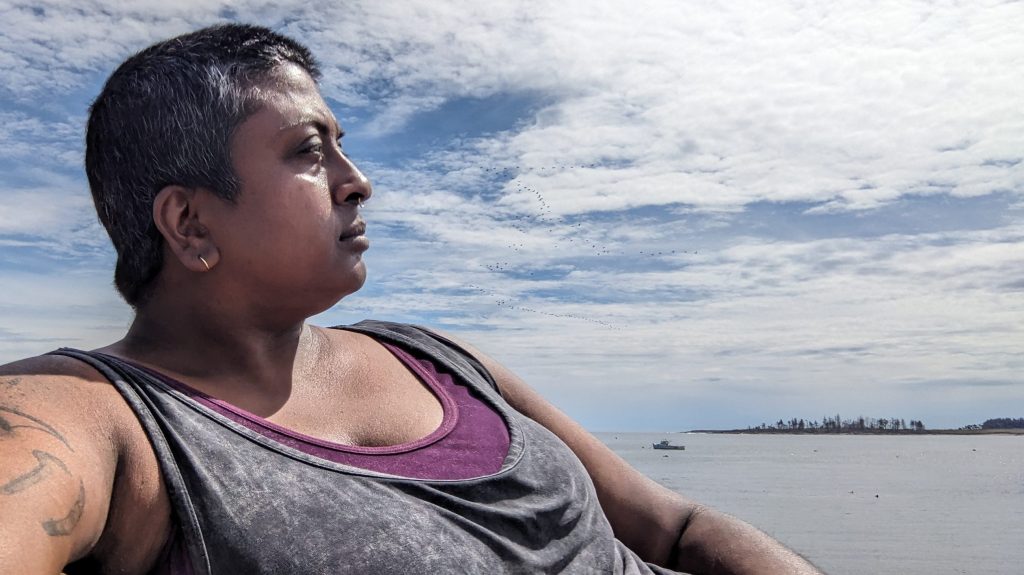
Beach reflections in Portland, Maine, April 2024.

I was really scared.

I wasn’t actually employed. I slept often, when I needed my brain to quit its doom scenarios. When gallivanting about in the world, I did not know how to respond to people’s what next inquiries. “Well, I spent the last seven years collaboratively building an organization fueled by a passion for curbing the deadly impacts of public health crises and sociopolitical failures that I might be too traumatized to know what I’m good at or could sustainably do for an income?”

I was still healing.

June ushered in structure and hope, both necessary for my mental well-being. I was in a flow of responding to harm reduction RFPs with my BIPOC femme comrades in Reframe Health and Justice, conducting outreach for national policy work with my policy consultant guides from Masa Group, and brainstorming collaboration with my dear friends of Alight Alchemy‘s circle. I was beginning to understand the types of work that exist for someone with my skill set, and how I was willing to spend my time.
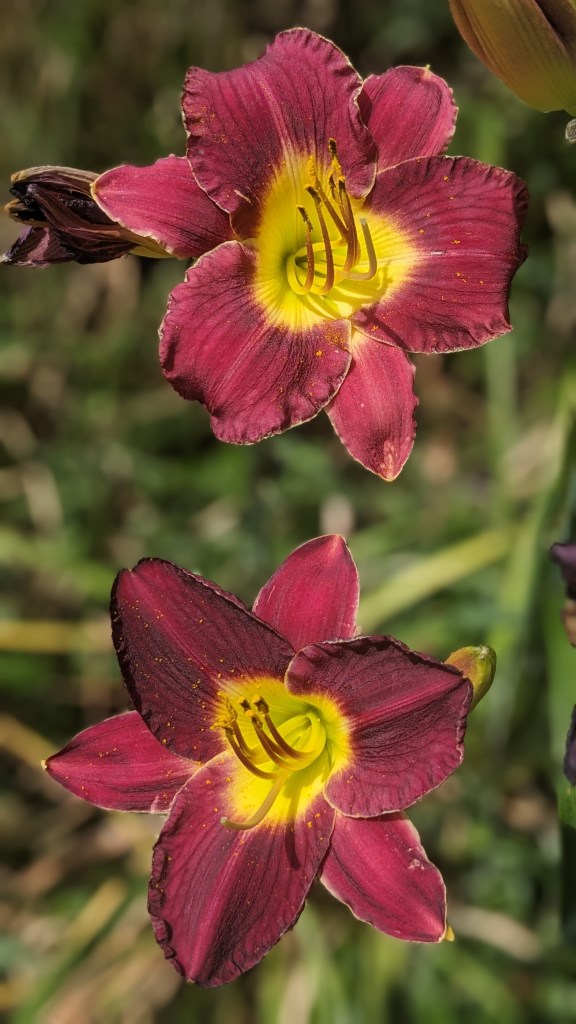
Bela Lugosi lilies in my garden, June 2024.

On Summer Solstice 2024, I received the gift of my first contract in this new iteration of my career. It was a small Reframe Health and Justice project, secured from an RFP, that would take me back to my childhood home of the San Francisco Bay Area. By the end of July, I was also a sub-contractor with Alight Alchemy on a race and gender justice project. At the start of September, I had two additional Masa Group contracts set up with brilliant folks from my network.

I was resourceful.

August into September 2024 was a churning build-up, which at the time I read as a beginning but in retrospect was a releasing. Like a shuttle launched into space, burning off its external tank and detaching its boosters. I was busily excited for my new position within the cosmos of movement work. I was actively within value-aligned work, protected post-ED recovery, and nurturing my writing.
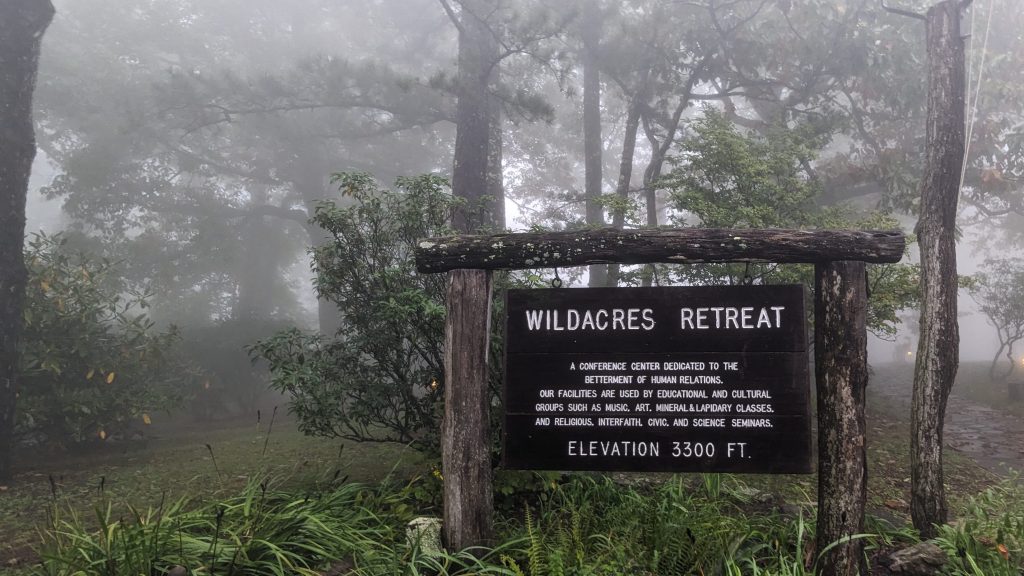
Wildacres Retreat Center one day before Hurricane Helene hit the area, September 2024.

As the Autumnal Equinox arrived, I traveled to the Blue Ridge Mountains above Asheville, North Carolina for a week-long literary retreat with Roots. Wounds. Words. My new community of 27 other BIPOC writers found ourselves within the center of Hurricane Helene. We took care of each other. We survived together. We were rewired together.

Upon my return home, the consulting groups and clients were deeply understanding about my need for pause. My loved ones held me and ensured my basic needs were met as I processed narrowly surviving a natural disaster. I found myself floating in Space, my movements controlled only by my previously eager launch and the constant pull of gravity.

I was prioritizing balance.

By mid-autumn, I made a goal of balancing care for my self, my loved ones, and my work. I developed a routine. I protected my sanity through the election and its continued aftermath.
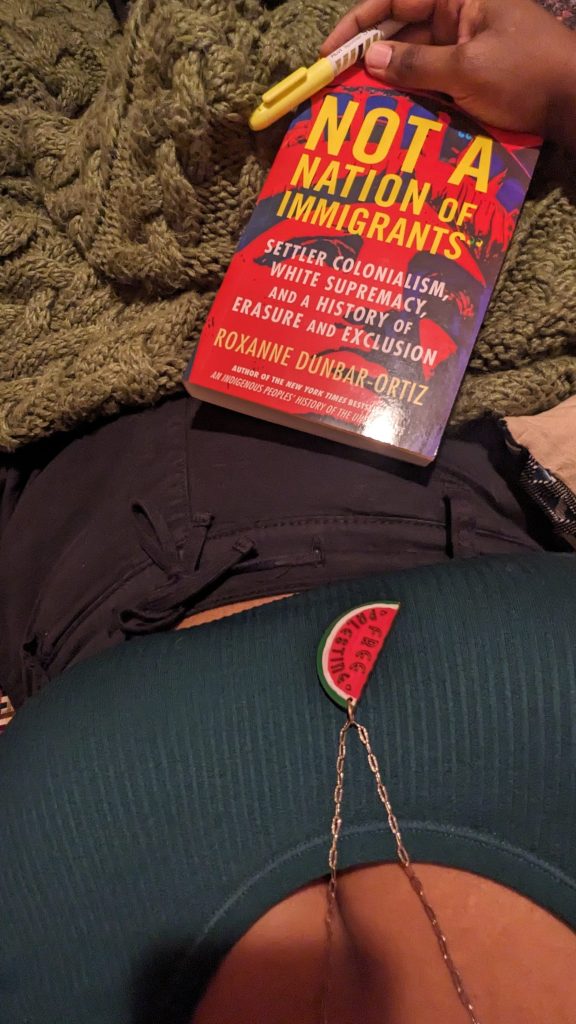
Me wearing a Free Palestine necklace reading “Not a Nation of Immigrants” by Roxanne Dunbar-Ortiz, November 2024.

Our reality was clarified in November. The well-being of my community remained paramount. My family of beautifully brilliant Brown and Black trans queer gender expansive humans and unabashedly Pro-Palestine accomplices. With Alight Alchemy, we curated offerings for BIPOC leaders without compromise. With Reframe Health and Justice, I listed and uplifted the political ideas of those most vulnerable to the drug war. With Masa Group, I met with various progressive policy workers interested in developing strategy to survive (and even boldly push for justice) in the coming years.

December, as always, was a month of closing and bookmarking.  My creative writing took a pause to give way to much needed technical writing. My first contract closed, and I felt pride. Other contracts paused with confidence in our continued collaborations through 2025.
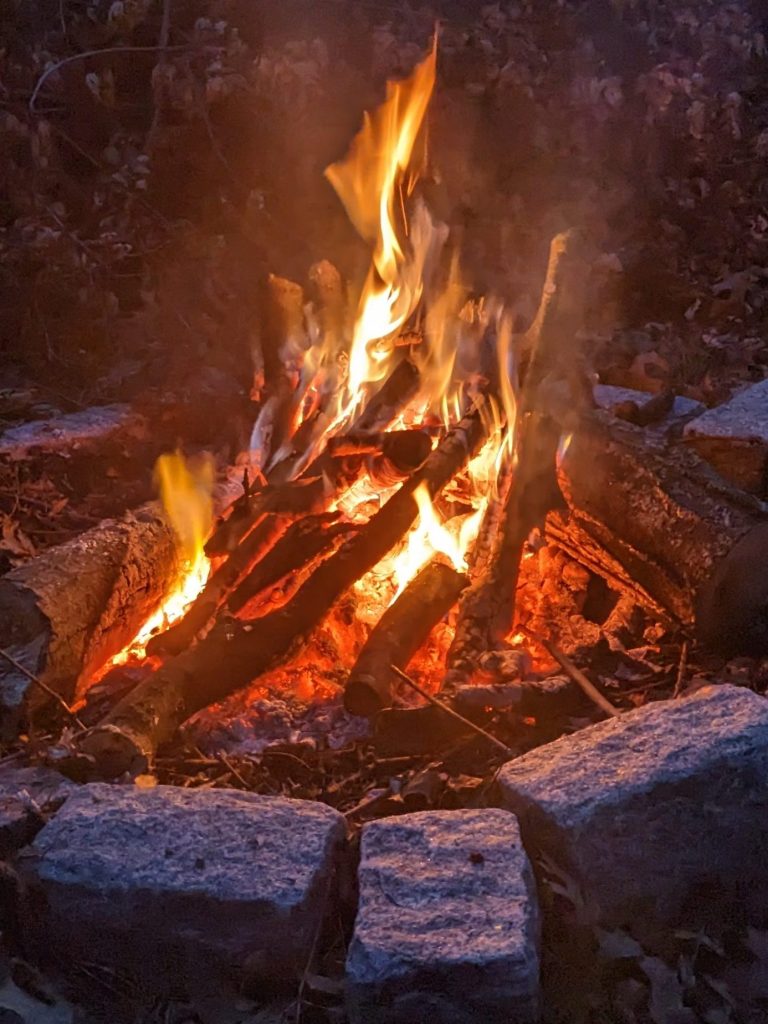
Our backyard firepit, December 2024.

Winter Solstice 2024 was celebrated with a creative writing session to jumpstart a three-week reprieve. In winters, I prioritize revisiting and building rest skills: writing, knitting, plant caretaking, and baking. This year, I began to build a pantry and skillset for baking as a gift to myself in this time in space of rare financial comfort. I have worked hard to curate my home over the past year(s), and I began working to celebrate it and me.

I prioritized myself.


In 2025, I am eager to internalize a greater confidence in myself and my impacts in the world. Sociopolitical and personal events in recent year(s) have weighed heavily on my shoulders, leading me to believe I was responsible to fix… well, anything. An impossible obligation I took in to my bones and muscles. In 2024, I began to release those notions. Now I am excited to just let myself enjoy, period.

I am excited to be a resource from a comfortably seated position in this and future years. In April I will turn 40, often a marker for middle age. As a good friend recently reflected: I am getting to that point in the relay race where I can pass back the baton to those with the passionate energy for movement making. People who remind me of the catalyzing energy of my past. That role sounds deeply generative creatively and professionally.

My work and passion will continue to move towards abolition of the drug war, and investment in systems of race and gender justice. If you catch me on social media or at a local coffee shop, I will likely be working on some iteration of the following projects:

  • Researching BIPOC and poor peoples’ resistance to State violence locally, nationally, and globally.
  • Brainstorming investment models for public health and harm reduction services.
  • Continuing to learn and act on my Pro Black, Palestine, Trans, Dalit and anti-oppression values
  • Writing and ranting on Substack about politics, social justice, and anything else that fires me up.

If you have read to this place, wow, thanks that is pretty cool of you. I mostly wrote this for me, which I suppose is why I write anything. As someone who relies on contract work, it would be wise for me to say: I am in the market for developing consulting projects with value-aligned organizations, so please share my updated consulting services page with your networks.

Take care in 2025 and beyond ❤
Writing Fellowship Fundraiser

On September 23–in two months exactly–I will arrive in Little Switzerland, North Carolina to join fellow storytellers of color selected by Roots. Wounds. Words. (RWW) for their semi-annual writing retreat. For one week, I will receive space to breath in the joys and challenges of writing, including instruction and fellowship with other writers of color. That is, if I can raise enough money to cover expenses.

Fulfilling a dream of curating my writing to share with the public unfortunately comes at many costs in this capitalistic system. Amidst a world on fire and many in need beyond measure, my ask for financial donations feels… selfish. I am reckoning with the challenges of pursing art in partnership with values-aligned resources, such as RWW. So I ask, if you have the means to do so, please consider joining my fundraiser: https://secure.givelively.org/donate/roots-wounds-words-inc/roots-wounds-words-2024-autumn-writers-retreat-for-storytellers-of-color/rajani-gudlavalleti-1

For years I have dreamt of having the space, energy, time, and honestly the confidence to apply to this fellowship — and here we are, so surreal. Attending the retreat will be deeply meaningful at this point in my life.

Earlier this year I left an organization that was often my everything – Baltimore Harm Reduction Coalition. For the past seven years, it was the forum through which I worked towards liberation. When I was sitting in that dream, I was grateful but unfulfilled–and very tired.

Much of the work involved building a confident bravado to appeal to funders and politicians. It became inauthentic. As is the story for social justice leadership, the demands of the work burned me until it no longer felt liberatory.

At this juncture in my life, I want my role in movements to be artistic and more detached from a reliance on capitalist labor. I want to be part of a process towards liberation that is not fueled by anxious urgency but joyful resistance.

This retreat would offer an opportunity to build long-lasting connections with other Brown and Black people who create political literary art. Fellow storytellers who are able and willing to name and hold the vulnerable parts of themselves, particularly with a sense of humility and humor. I hope you can support me in attaining this dream. Thank you.

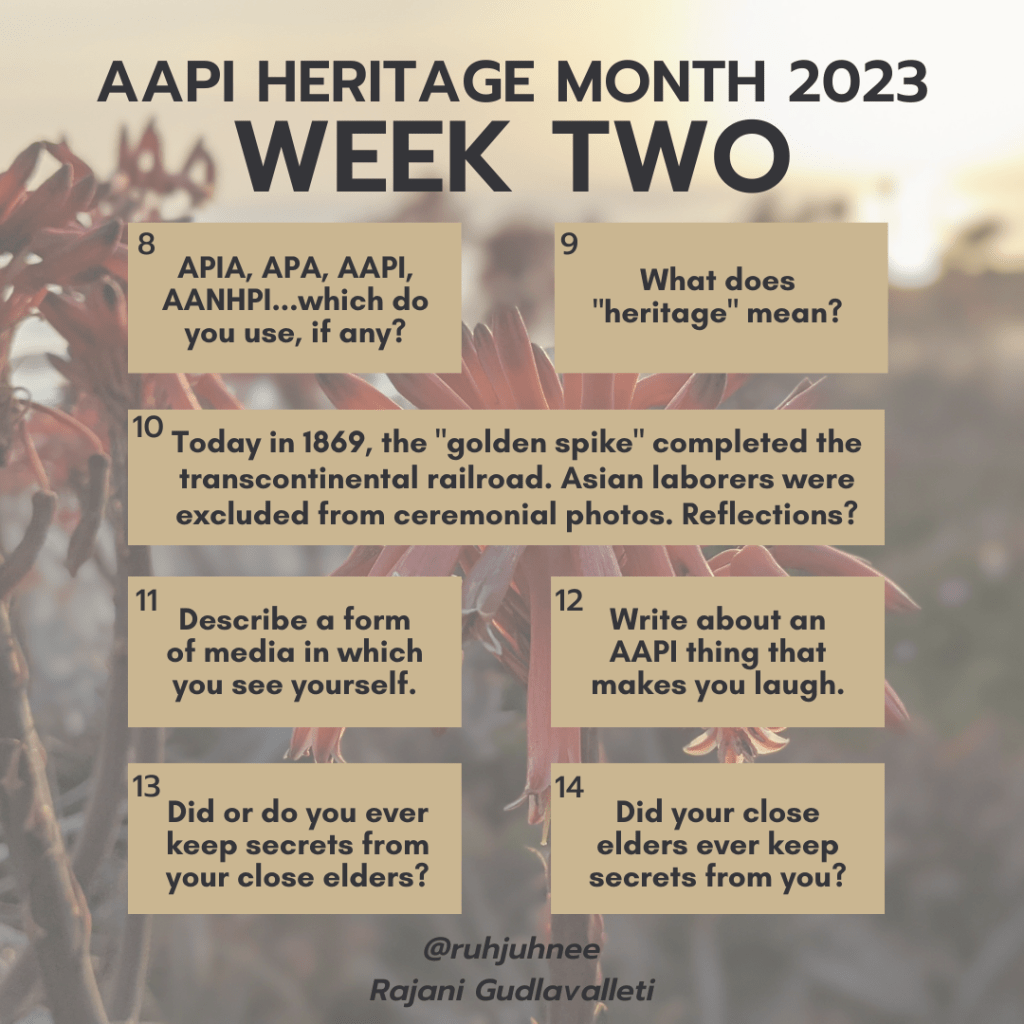
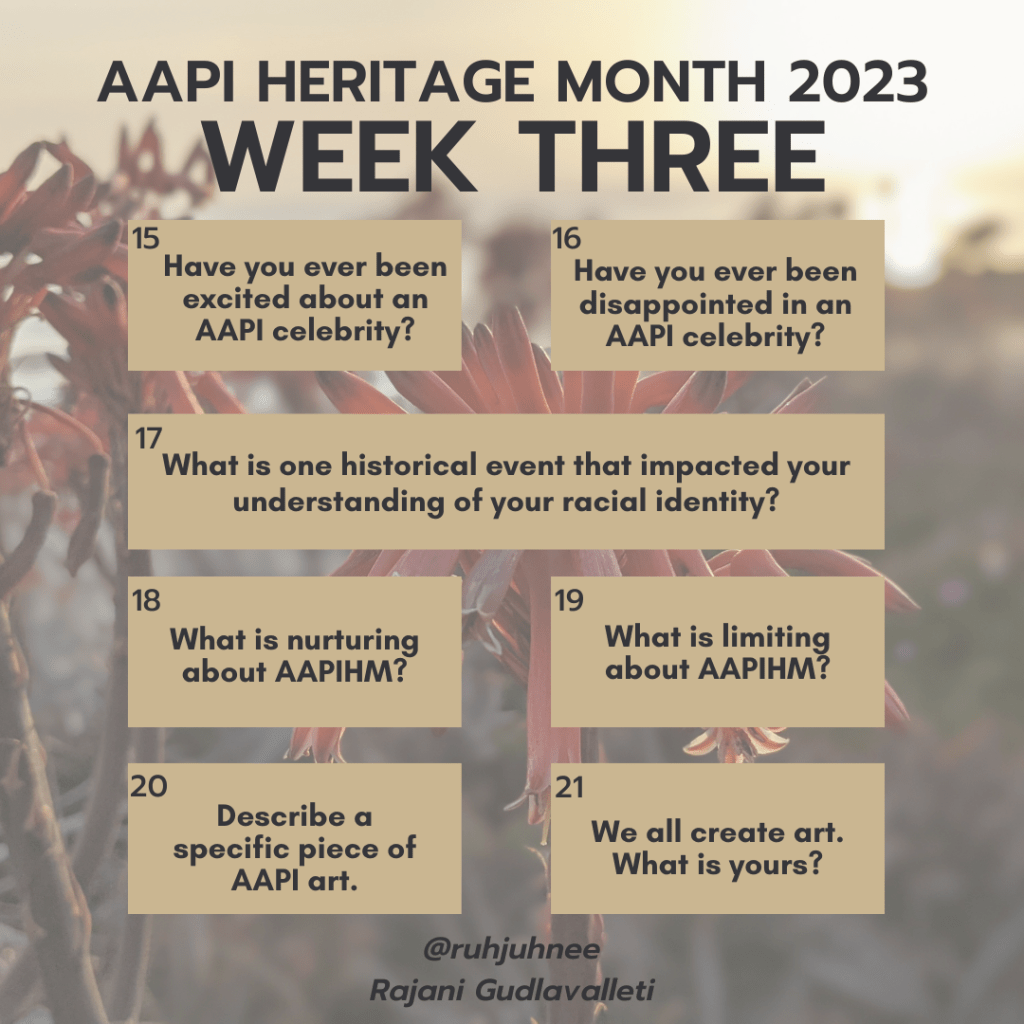
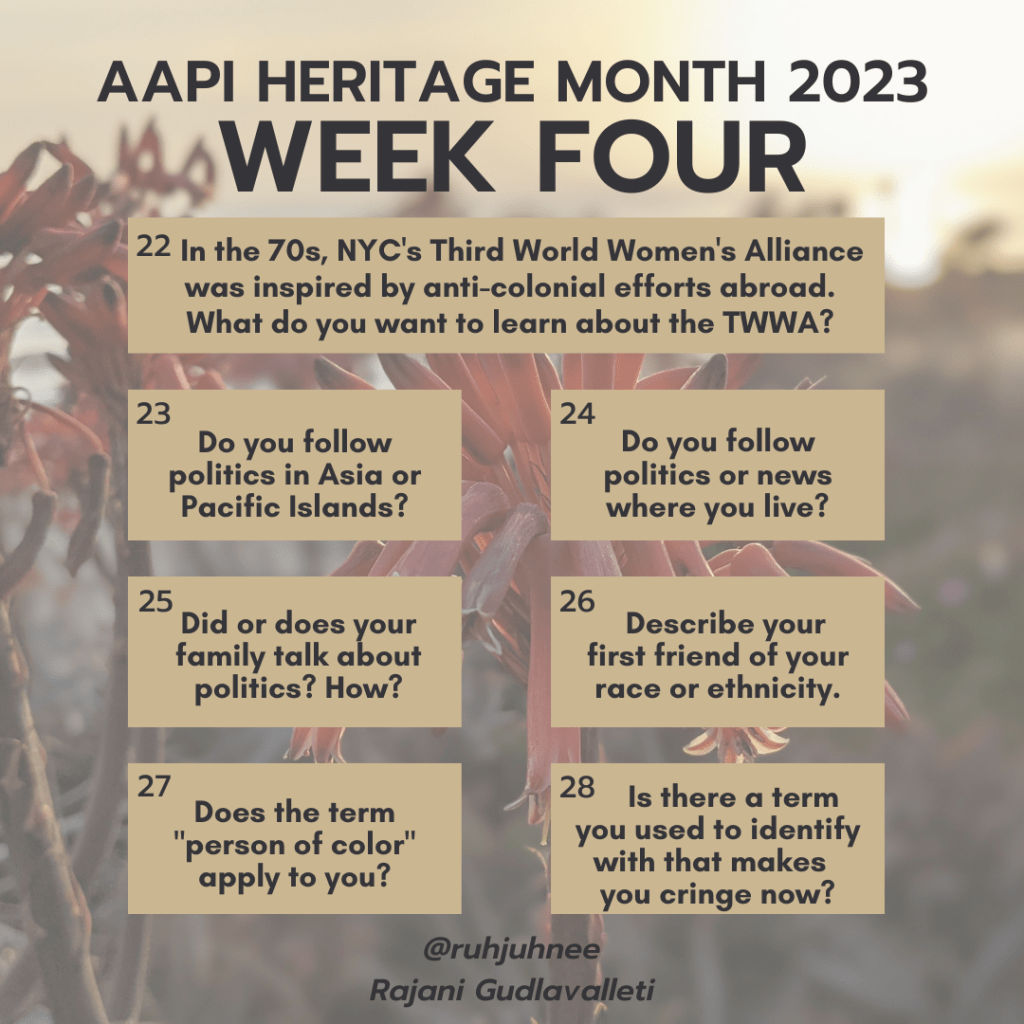
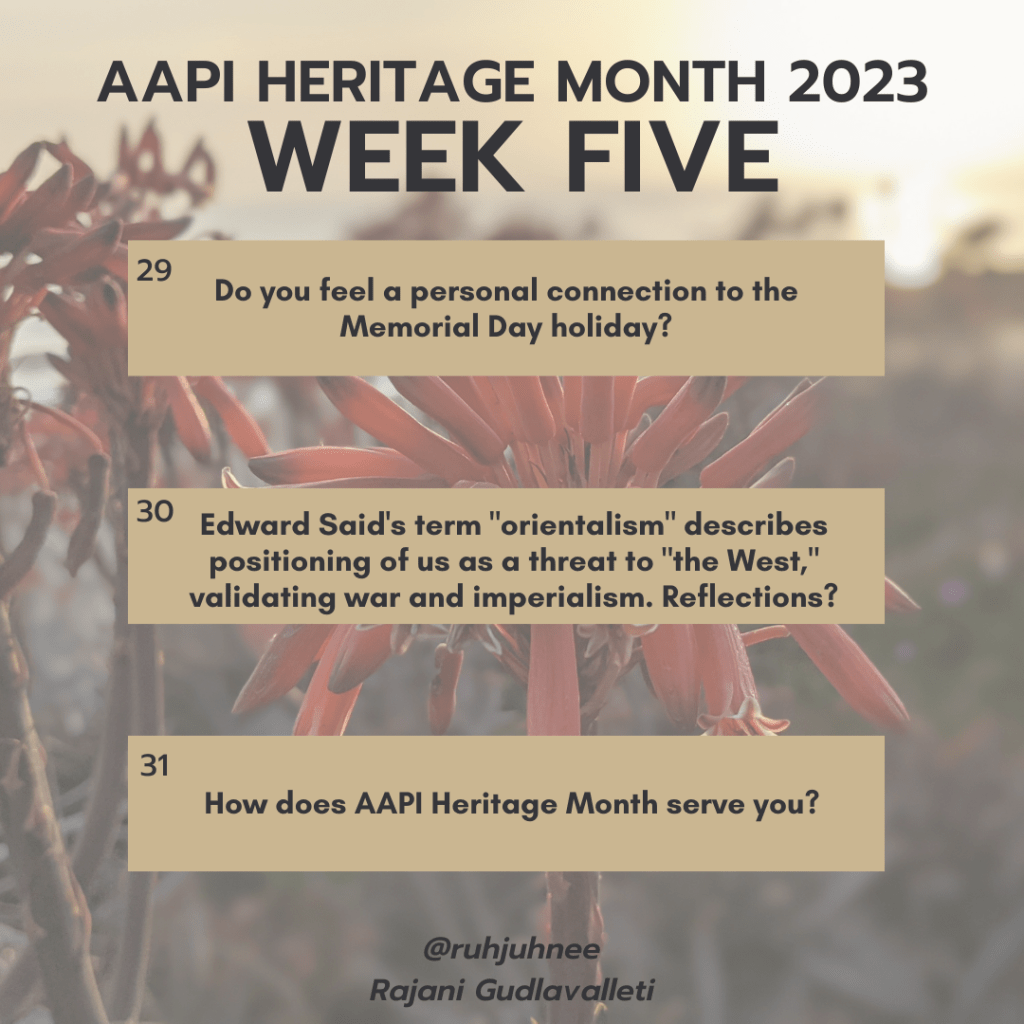
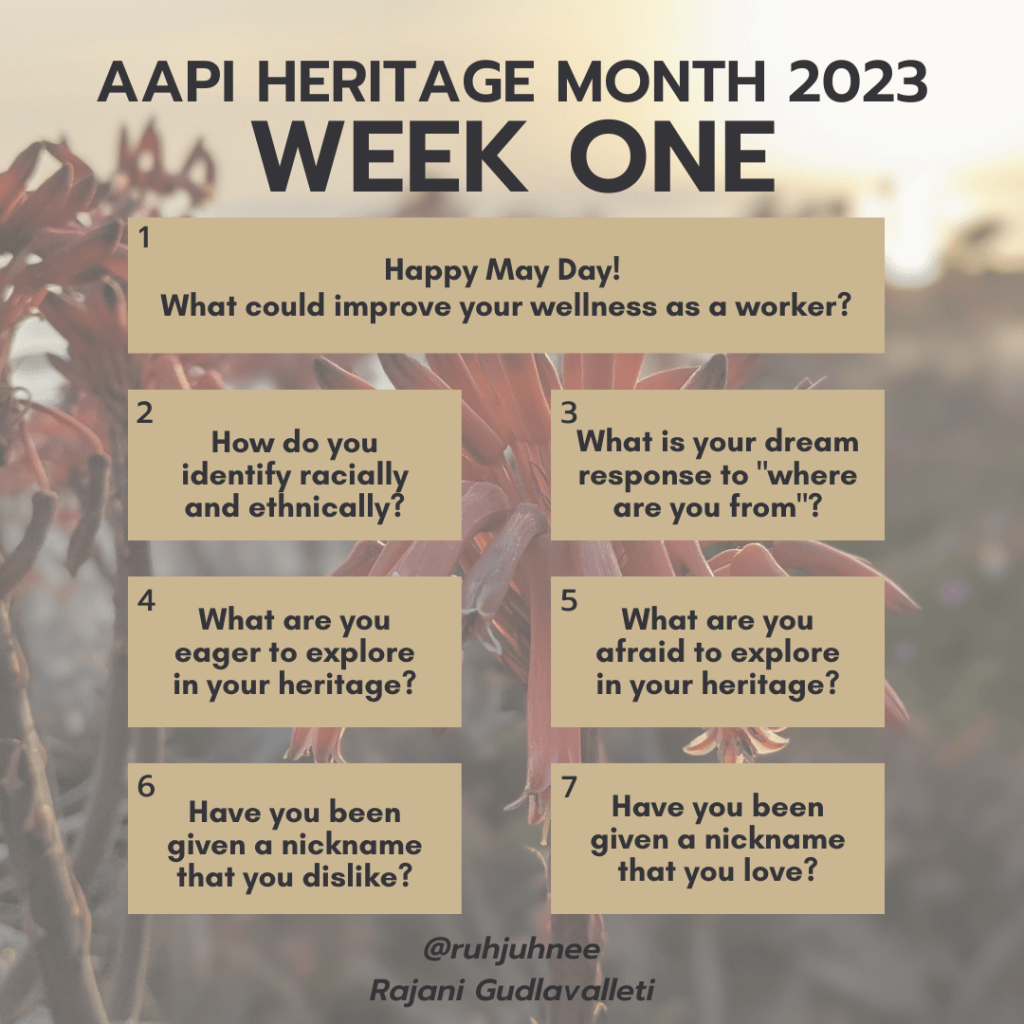
AAPI Heritage Month Writing Prompts

I won’t lie, I was inspired to do this from a commercial. At the movie theater. Before “Dungeons and Dragons” played. Like, where the least attention is paid to commercials because most people are busy spending extraordinary amounts of money on popcorn and sugar drinks.

There we were, KN95-ed-up, ready to get nerdy while trying to be as safe as possible in a continuous epidemic, as some AAPI actors come on screen. Mind you, my attention is also perked at the sight of fellow Asians because #representation. These actors talk about how nice and cool Asian people. It’s cringey. I take this as an obvious Hollywood attempt to, I don’t know, end anti-Asian violence?

This cheesy commerical was “for” Asian American and Pacific Islander Heritage Month. That is when it happened. I realized I had forgotten about heritage month. After it has played a role throughout my life: childhood multicultural weeks in the 1990s Bay Area, and over a decade of community organizing to highlight AAPI people as part of racial justice movements. I just, forgot.

The question is, why do I care that I forgot? This is where the writing prompt idea came to light. I need to stop and think. I want to understand how AAPIHM serves me. I want to know how it serves the AAPIHM people in my spheres.

I offer this writing prompt practice to fellow AAPI folks to explore our heritage and hopefully, ourselves. While I offer 31 prompts for the 31 days of the month, there is no pressure to keep up everyday. Reflect on what speaks to you and leave the rest. Please share with the AAPI people in your life and tag me as able. Let’s use this month for some introspection.

2020 into 2021: life amidst death

Life amidst death. Right now, this is how I choose to capture the year 2020. Within these three words — life amidst death — there is a universe. An ever-evolving, ever-adapting, beyond comprehension, heart-wrenching, heart-expanding, destructive, chaotic, sensible universe.

If not for 2020, it may have taken me far too long to learn — contrary to what I had been led to believe — life and death are far from opposition. In fact, life amidst death is truly a model for the fallacy of the binary. As mortals who can only exist in linear time, life can feel like a journey that moves us closer to our own deaths. Our hearts are beating and our brain synapses firing, and then they are not. That is mortality; that is not life.

Ravaged by the rapid fire coronavirus, our collective mortality has come much closer into view and humanity on Earth is forever changed. We tell ourselves to “keep on living” and hope that the deaths will end soon, as long as we trust in science and politics and all such else that in the same breath has historically proven to dehumanize and violate the majority of us.

Within this, we are actively and unceasingly in a process of grief. Within that, a vaccine is being injected into bodies deemed essential by the medical industrial complex. Will this vaccine bring back my community member who died of COVID-19 a week ago? Will it cure the cancer that killed my mentor who died in July? Will it bring back my beloveds who overdosed throughout 2020 and for decades before? Will it create a system that would have actually loved each and every one of the dead and living from the moments we entered life ?

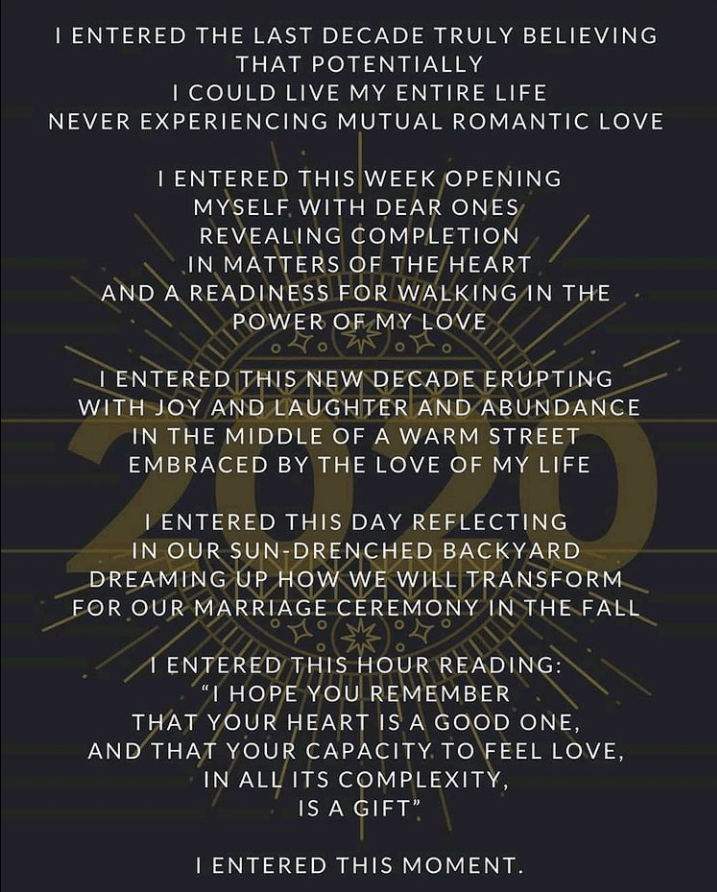
I am angry. To be angry about death right now is an asset. It is an anger within love. I love my anger. To love. To be loved. On January 1, 2020 I ruminated on love. A readiness for walking in the power of my love. Abundance, transformation, revelations, and complexity.

I am now an angry, loving, living being in the future. I am living in the year 2021. My love has brought me here. My anger pushes me forward. I catalyze forward movement towards an ocean of life filled with radical love. I grieve the dead, I carry on legacies, I weep for joy as my Amma gets her COVID-19 pt.1 vaccine, and I use an invisible network to send silly videos to my chosen family and order frivolous gold shoelaces purely to engage with joy.

Life amidst death. I have lived amidst this deadly year, and I will live amidst the next one.

(Image below: a poem I wrote and published on social media on January 1, 2020)

National Harm Reduction Conference Reflections

 In mid-October, I attended the national Harm Reduction Conference for the first time and walked away in a deep state of reflection on both my role in harm reduction and harm reduction’s role in a broader social justice movement.

Many of the speakers, particularly women and queer people of color, opened my mind and heart to newer understandings of how to practice liberation-oriented harm reduction. For me, it begins with reclaiming my creativity and retaining my fire for challenging systems. At the same time, collaborating with government systems, public health and law enforcement in particular, are perceived to be integral to “successful” harm reduction policies and programs. Speakers and attendees at the conference provided insight on navigating these challenges.


“The more we get accepted into public health, the more we lose our imagination. We need to act as if this is illegal everyday because it is.” — Shira Hassan

Since the harm reduction conference, I am considering ways to more deliberately critique public health modeling methods and celebrate the illegal roots of harm reduction. If we are to replicate programs and policies from other cities and countries, such as safer drug consumption spaces (SCS), we must incorporate significant recognition of how systems of oppression impacted the original program. We must consider how it might impact design and implementation of subsequence programs, otherwise continuing to replicate these oppressions.

Regarding SCS, we have a good start given that the SCS bill in the State of Maryland dictates that these should be community-run and staffed by peers. However, as we inch closer towards passing this legislation, potentially years from now, we will face the challenge of compromise. If we compromise this and allow for state intrusion or control, SCS will be absorbed, co-opted and watered down by the public health system to avoid working to address the full breadth of our communities’ needs. We must consistently work to dismantle systems of oppression that uphold state power, even if this means our harm reduction programs must remain illegal.


“In our work, we talk about shifting the narrative from ‘evidence-based practice’ to ‘practice-based evidence.’” — Elizabeth, Vancouver B.C.

  • My experience as a co-facilitator of POC-only spaces at HRC: Mostly held space for trauma that has been forgotten and ignored within and outside of harm reduction movement
  • Decades of harm reductionists turning to public policy and lobbying within a political system designed to destroy us (this has been a heart wrenching and challenging realization over the past decade; master’s in public policy program at JHU in 2009-2011)

“When you have less, you are more creative to reclaim and reimagine what is possible around our well-being and safety.” — Erica Woodland

  • Don’t lose sight of vision of liberation (decriminalization, reparations, pleasure)
  • When working in coalition, must always name the compromise you are willing or allowing, the boundaries of your compromise, and the flexibility/area of negotiation (Kassandra)
  • Consistent messaging on decriminalization and ending racist war on drugs (Toronto)
  • Leverage the moment to build power, not just programs (Kassandra)
  • ID & support those already running safer spaces (underground, galleries, etc.)

Questions for Baltimore harm reductionists to consider and discuss:

  • What is the role of harm reduction in the fight for reparations for decades of the racist war on drugs, particularly in Baltimore?
  • Does harm reduction, and specifically the SCS movement, tell us who should be healed and how to be healed? Or is this a symptom of the influence of the public health system?
  • Is SCS just containment? How do we keep pushing further and beyond this?
  • An attendee of “SCS in CoC” said, “There is no safe space for Black people in the U.S.” How do we acknowledge and reconcile this truth when we advocate for safer consumption spaces?
  • What else can we consider in our magical radical imaginations?