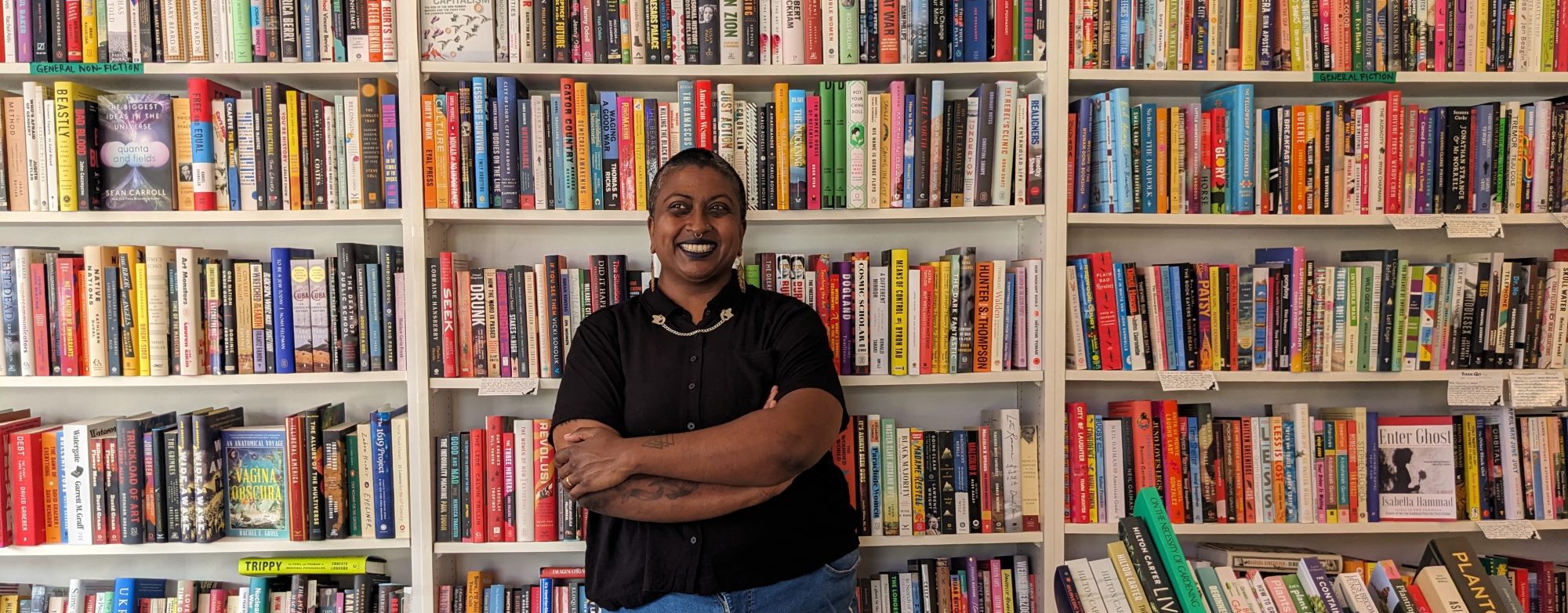
In mid-October, I attended the national Harm Reduction Conference for the first time and walked away in a deep state of reflection on both my role in harm reduction and harm reduction’s role in a broader social justice movement.
Many of the speakers, particularly women and queer people of color, opened my mind and heart to newer understandings of how to practice liberation-oriented harm reduction. For me, it begins with reclaiming my creativity and retaining my fire for challenging systems. At the same time, collaborating with government systems, public health and law enforcement in particular, are perceived to be integral to “successful” harm reduction policies and programs. Speakers and attendees at the conference provided insight on navigating these challenges.
“The more we get accepted into public health, the more we lose our imagination. We need to act as if this is illegal everyday because it is.” — Shira Hassan
Since the harm reduction conference, I am considering ways to more deliberately critique public health modeling methods and celebrate the illegal roots of harm reduction. If we are to replicate programs and policies from other cities and countries, such as safer drug consumption spaces (SCS), we must incorporate significant recognition of how systems of oppression impacted the original program. We must consider how it might impact design and implementation of subsequence programs, otherwise continuing to replicate these oppressions.
Regarding SCS, we have a good start given that the SCS bill in the State of Maryland dictates that these should be community-run and staffed by peers. However, as we inch closer towards passing this legislation, potentially years from now, we will face the challenge of compromise. If we compromise this and allow for state intrusion or control, SCS will be absorbed, co-opted and watered down by the public health system to avoid working to address the full breadth of our communities’ needs. We must consistently work to dismantle systems of oppression that uphold state power, even if this means our harm reduction programs must remain illegal.
“In our work, we talk about shifting the narrative from ‘evidence-based practice’ to ‘practice-based evidence.’” — Elizabeth, Vancouver B.C.
- My experience as a co-facilitator of POC-only spaces at HRC: Mostly held space for trauma that has been forgotten and ignored within and outside of harm reduction movement
- Decades of harm reductionists turning to public policy and lobbying within a political system designed to destroy us (this has been a heart wrenching and challenging realization over the past decade; master’s in public policy program at JHU in 2009-2011)
“When you have less, you are more creative to reclaim and reimagine what is possible around our well-being and safety.” — Erica Woodland
- Don’t lose sight of vision of liberation (decriminalization, reparations, pleasure)
- When working in coalition, must always name the compromise you are willing or allowing, the boundaries of your compromise, and the flexibility/area of negotiation (Kassandra)
- Consistent messaging on decriminalization and ending racist war on drugs (Toronto)
- Leverage the moment to build power, not just programs (Kassandra)
- ID & support those already running safer spaces (underground, galleries, etc.)
Questions for Baltimore harm reductionists to consider and discuss:
- What is the role of harm reduction in the fight for reparations for decades of the racist war on drugs, particularly in Baltimore?
- Does harm reduction, and specifically the SCS movement, tell us who should be healed and how to be healed? Or is this a symptom of the influence of the public health system?
- Is SCS just containment? How do we keep pushing further and beyond this?
- An attendee of “SCS in CoC” said, “There is no safe space for Black people in the U.S.” How do we acknowledge and reconcile this truth when we advocate for safer consumption spaces?
- What else can we consider in our magical radical imaginations?
 rajani gudlavalleti